EFCATS News

Summer School 2012 "Recent Advances and New Trends in Catalysis"
Jean-Claude Volta, An Obituary
Summer School 2011 "Energy and Materials from the Sun"
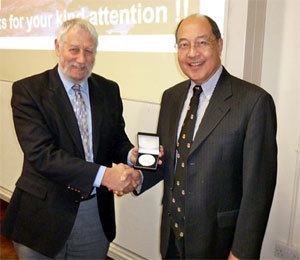
James Dumesic - 2011 Michel Boudart Award for the Advancement of Catalysis
Jerzy Haber; An Obituary
Avelino Corma - 2009 Michel Boudart Award for the Advancement of Catalysis
Eric Derouane - obituary of the former EFCATS president


Dear Colleagues,
the deadline for submitting an abstract and applying for a fellowship for the 2012 Edition of the Summer School of the European Federation of
Catalysis Societies (EFCATS) is approaching 31 May.
The Summer School will coincide with the 1st Italian-Spanish School on Catalysis and it will be held in Pallanza-Verbania, on the shore of Lake
Maggiore, Italy, on September 11-15, 2012.
The four-day programme consists of invited lectures by leading experts in the field of design, characterization, study and application of homogeneous and heterogeneous catalysts.
It is surely a remarkable occasion for students and young reserachers to have an authoritative global overview on fundamentals and applications
of catalysis.
Confirmed speakers:
- Guido Busca, University of Genova
- Gabriele Centi, University of Messina
- Christophe Copéret, ETH Zurich
- Krijn P. de Jong, University of Utrecht
- Enrique Iglesia, University of California Berkeley
- Bruce C. Gates, University of California Davis
- Ive Hermans, ETH Zurich
- Jordi Llorca, Technical University of Catalonia
- José A. Mayoral, University of Zaragoza
- Barbara Milani, University of Trieste
- Hans Niemantsverdriet, University of Eindhoven
- Marco Ricci, Eni SpA
- Catherine Pinel, CNRS and University of Lyon
- Gadi Rothenberg, University of Amsterdam
- Philippe Sautet, CNRS and ENS of Lyon
- Antonio Sepulveda-Escribano , University of Alicante
- Enrico Tronconi, Politecnico of Milano
- Adriano Zecchina, University of Torino
Additional details and information can be found at the School website:
http://gic.istm.cnr.it/EFCATS2012
or in the 1st call-for-abstracts .
Rinaldo Psaro
Chairman


IN MEMORIAM

Jean-Claude VOLTA (1946-2011)
Jean-Claude Volta was born in Givors near Lyon, France on 3rdMarch 1946 and died in Lyon on 18th June 2011. He received a chemical engineer degree at the ''Ecole Supérieure de Chimie Industrielle de Lyon'' ESCIL, in 1968 and his ''Doctorat ès Sciences'' in 1973 from the University of Lyon.
His scientific career was almost entirely at the ''Institut de Recherches sur la Catalyse'' IRC, CNRS in Villeurbanne (Lyon), now IRCELYON. His passion for Brazil was quite intense. He collaborated in particular with Paolo Gustavo Pries de Oliveria and Lucia Appel from INT (Instituto Nacional de Tecnologia) in Rio de Janeiro and worked there for one year. He was also able to speak portuguese.
He retired in March 2006 as ''Directeur de Recherche au CNRS'', after being at the head of the Oxide group.
Everyone will remember him as an enthusiastic and brilliant scientist who contributed enormously to the scientific and social life of the Institute over 30 years. He was a lively figure at international conferences, often addressing searching question in his charmingly accented English.
He was awarded the annual award by the Catalysis division of the French Chemical Society in1984 for his major contribution in ''structure sensitivity'' of metallic oxides for catalytic selective oxidation of hydrocarbons. His case study was MoO3 single crystals.
He has more than 150 publications and patents in the field of oxidation catalysis in which he is world famous. His contribution to VPO catalysts for butane oxidation to maleic anhydride was important and outstanding. He has developed the spin echo mapping technique in MAS-NMR with Dr. Alain Tuel (IRCELYON), pioneered in situ/Operando Raman studies with analysis of reactants and products by GC on line with Professor Ollier at Ecole Centrale de Lyon and HR-TEM with Professor Chris Kiely (University of Liverpool, UK, now at Lehigh University, USA).
Jean-Claude was a founding member of the European CONCORDE (CO-ordination of Nanostructured Catalytic Oxides Research and Development) network and played a vital role in discussions leading to its formation. A special issue of the Journal Applied Catalysis A was organized by his friends and colleagues who wanted to express their recognition to Jean-Claude Volta on the occasion of his retirement and to celebrate his contribution to the field of structure sensitivity and selective oxidation in heterogeneous catalysis. This note is essentially based on the preface of this special issue.
His friends
June 2011


Summer School "Energy and Materials from the Sun"
June 20-23, 2011, Rolduc Abbey, The Netherlands
A 3½-day Summer School for PhD students, postdocs and anyone else interested in the subject "Energy and Materials from the Sun" will be organized in Rolduc Abbey, amidst the beautiful hills in the southern part of The Netherlands, on June 20-23, 2011.
The programme consists mainly of invited lectures by authorities in the field of energy from renewable sources, photochemistry, photovoltaics, synthetic fuels, biomass utilization, clean combustion technology and materials for energy applications. In addition there will be poster sessions, meet-the-speaker discussions, and four parallel workshops where PhD students and postdocs will present their work.
The Summer School intends to educate with authoritative lectures, to give students the chance to present their work to and communicate with experts in workshops and poster sessions, and to do all this in an informal setting, in which we will also organize the time-tested soccer match between Europe and the Rest of the World.
The Summer School is co-organized by several organizations:
- The European Graduate School on Sustainable Energy, of DTU Denmark, TU Munich, and Eindhoven University of Technology;
- The European Federation of Catalysis Societies (EFCATS);
- Partnerships for International Research and Education (PIRE - Biomass Conversion), consisting of the US Universities of Wisconsin, Iowa State, New Mexico and Virginia, and several European Universities (Åbo Akademi, DTU, FHI-Berlin, TU/e, Utrecht, Twente);
- The South African DST-NRF centre of excellence C*CHANGE;
- The Royal Netherlands Chemical Society (KNCV - section Catalysis);
- The Netherlands Institute for Catalysis Research (NIOK).
Registration, abstracts and student Scholarships
Participation will be limited to about 135, early registration (website only) is therefore recommended. A substantial number of
scholarships for PhD students covering the participation fee is available:
- PhD students from EFCATS affiliated universities (excluding The Netherlands, and students from the European Graduate School) can apply for one of the 35 Scholarships sponsored by EFCATS.
- US PIRE, EGS-Sustainable Energy and C*Change will sponsor their members according to their own procedures.
- PhD students from Dutch universities can apply for Scholarships sponsored by NIOK and KNCV - section Catalysis which will cover 50% of the registration fee.
See the website www.europeansummerschool.eu for details.
Scholarship applications, as well as abstracts for poster or oral presentation can be submitted by following the instructions on the website.
Flyer
Prof. dr. Hans Niemantsverdriet - TU/e, chairman, Prof. dr. ir. Emiel Hensen - TU/e, Prof. dr. ir. Bert Weckhuysen - Utrecht University and NIOK, Dr. Matthijs Ruitenbeek, DOW Chemical and KNCV Catalysis
16.3.11

James Dumesic is the recipient of the 2011 Michel Boudart Award for Advances in Catalysis
We are pleased to announce that Professor James A. Dumesic of the University of Wisconsin-Madison is the recipient of the 2011 Michel Boudart Award for Advances in Catalysis, sponsored by the Haldor Topsøe Company and administered jointly by the North American Catalysis Society and the European Federation of Catalysis Societies. The Award will be presented at the 22nd North American Meeting of the Catalysis Society (Detroit, June 2011) and at Europacat X (Glasgow, August 2011).
This Award recognizes and encourages individual contributions to the elucidation of the mechanism and active sites involved in catalytic phenomena and to the development of new methods or concepts that advance the understanding and the practice of heterogeneous catalysis. It is meant to recognize individuals who bring together the rigor and the international impact that exemplifies the accomplishments and the career of Professor Michel Boudart.
Professor Dumesic is being specifically recognized for his pioneering work on the transformation of biomass-derived molecules to chemicals and fuels. In a combination of discovery and refinement, driven by catalytic insight that is his hallmark, Dumesic and his coworkers used thermodynamic and kinetic considerations, combined with catalyst optimization to develop a one-step aqueous phase reforming route from sugars and other biomass-derived oxygenates to hydrogen and/or alkanes. The work was guided by mechanistic insights about the relative rates of C-C cleavage, leading to the formation of H2 and CO/CO2, and C-O cleavage, which forms alkyl moieties, and led to the optimization of aqueous phase reforming for either H2 or alkane products. His studies elucidated catalysts and reaction conditions for polyol reforming that favor C-C cleavage with minimal water-gas shift, thereby allowing glycerol reforming and Fischer-Tropsch synthesis to occur within a single reactor. These discoveries were quickly followed by two new and innovative catalytic conversion processes. One approach employs a cascade of reactors, each designed to sequentially attack specific functional groups; these reactions remove oxygen, achieve carbon-carbon bond synthesis, and steer the final upgrading steps towards the desired fuel molecules. These studies have shown how metal functions, moderated by another metal, can convert sugars and polyols to mono-functional intermediates, such as ketones, alcohols, and carboxylic acids, by balancing the rates of C-C and C-O cleavage. This approach led to strategies to form new C-C bonds via coupling of these mono-functional intermediates to adjust chain length, as in the case of ketonization catalysis of carboxylic acids on mixed oxides and subsequent aldol-condensation to react ketones and alcohols on solid bases. Another novel approach involved γ-gamma-valerolactone decarboxylation to butene and its oligomers and, in related work, the use of metal-acid bifunctional catalysts to convert valerolactone to C9 ketones by coupling ring-opening and C=C bond hydrogenation with the ketonization of resulting pentanoic acid.
This body of work has redefined the frontiers of fundamental catalysis while simultaneously addressing the critical worldwide needs for renewable energy sources and epitomizes the confluence of elegance and relevance in catalysis that the Boudart Award intends to recognize.
Enrique Iglesia, President, North American Catalysis Society Avelino Corma Canos, President, European Federation of Catalysis Societies
13.12.10

IN MEMORIAM
 |
Jerzy Haber
(1930-2010) |
Professor Jerzy Haber, an outstanding scientist, Leader and Tutor of many generations of Polish chemists, a remarkable organiser of research, died on January 1, 2010. He was an internationally acclaimed specialist in solid state chemistry, catalysis and surface phenomena who created and directed for many years the Institute of Catalysis and Surface Chemistry of Polish Academy of Sciences in Krakow.
Jerzy Haber was born on May 7, 1930 in Krakow and linked with this city his entire professional and private life. Here, in 1951, he graduated in chemistry from the Faculty of Mathematics, Physics and Chemistry of the Jagiellonian University. After graduation, he took position of a research assistant at the AGH University of Technology in Krakow, working on physico-chemical properties of transition metal oxides in the research group of Professor Adam Bielański. In his research, he demonstrated a correlation between changes in their electron properties and catalytic activity (A.Bielański, J. Dereń, J. Haber, Nature 179 (1957) 668). This was one of the first experimental confirmations of the electron theory of catalysis in the world. His doctoral thesis 'A relationship between the electric conductivity of a working catalyst and its catalytic activity', accomplished at the age of 26, concerned the same subject.
In 1960-1961, he stayed as a postdoctoral fellow at the University of Bristol, where he undertook with Professor F. S. Stone a pioneering at that time research on the interpretation of photoadsorption and photocatalysis on the basis of the crystal field theory, the results of which have been quoted until today in the textbooks and monographs (J. Haber, F.S. Stone, Trans. Faraday Soc. 59 (1963) 19).
On his return to Poland, he continued his work at the AGH University of Technology until 1968 first as a research fellow and then as an associate professor. He was an excellent lecturer. His lectures on physical chemistry attracted crowds of students of various departments of the university.
In 1968, he was appointed director of an independent Laboratory of Catalysis and Surface Chemistry of Polish Academy of Sciences (since 1978, the Institute). The Institute was Jerzy Haber's life accomplishment. He masterminded the concept of creating a platform for a mutual exchange of ideas and research in the entire area of the physical chemistry of gas-solid, gas-liquid and solid-solid interfaces. He stood behind the spectacular development of the Institute which started in a few rented premises with 28 members of staff, including just 5 in catalysis sensu stricte, and attained during 30 years its own impressive building, unique research equipment and almost 100 members of staff, including 15 professors and associated professors, specialising in diverse aspects of catalysis, surface chemistry and colloids. In spite of difficult times of politically divided Europe, the Institute has become an element in the international research network, a place of free flow of ideas, open to contacts with the entire world, a true centre of excellence in its area.
At the Institute, Jerzy Haber initiated and developed broad research, both fundamental and applied, in diverse areas of heterogeneous and homogenous catalysis, as well as solid state chemistry applied to catalysis. In particular, his research concerned oxide systems - catalysts of the selective oxidation processes, as well as zeolites, catalysts based on metallo-organic complexes, and catalysts used in the environmental protection, to mention just the most important research directions.
The investigations have led to the formulation of a theory of catalytic oxidation of hydrocarbons and have introduced into the world literature the concept of electrophilic and nucleophilic oxidation. The classification revealed a correlation between the catalytic properties of transition metal oxides and their structure, and has become foundation of the science-based selection of the catalysts. Professor Haber demonstrated that the ability of oxides of transition metals of groups V - VII to add selectively oxygen atoms to the hydrocarbon chain of an organic molecule is linked with the phenomenon of crystal shearing. Investigations of single-crystal oxide catalysts have led to a general conclusion that the consecutive elementary steps of the catalytic reaction may proceed on different crystal faces (structure-sensitive reactions).
Jerzy Haber was first in the world to initiate research on the description of elementary steps of the reaction of catalytic oxidation of hydrocarbons using quantum chemical methods. They revealed that the reaction path depends on the orientation of reacting molecules one with respect to another and to the catalyst surface which undergoes restructuring.
The investigations on the homogenous reactions of hydrocarbon oxidation with the participation of transition metal porphyrins as model catalysts, allowed revealing role of the electron structure of transition metal ions as active centres for these reactions, and formulating the mechanism of initiation of the chain reactions and the chain development step.
Jerzy Haber was actively committed to organising research in Poland, among other by coordinating the national research programme in catalysis. Since 1971 he was full professor in chemical sciences, since 1973 a corresponding member and since1983 a full member of the Polish Academy of Sciences, since 1990 a member of the Presidium of the Academy, President of the Krakow Branch of the Academy since 2003, a full member of the Polish Academy of Arts and Sciences since 1991, the director of its Class of Mathematics, Physics and Chemistry, 1999-2008, a founding member of the Polish Club of Catalysis and its President, 1992-2007, a member of Research Council to the President of the Republic, 1991-95, a member of the Central Commission for Research Degrees, 1975-81 and 2000-06, and a member of the National Council of Environmental Protection, 1991-2002. For his research and administrative activity, he was awarded among others the doctorate honoris causa by the Marie Curie-Sklodowska University in Lublin, the Research Prize of the Prime Minister, the Commander Cross with Star of the Order of Polonia Restituta.
Excellent erudition, organisational talents, fluency in several languages, friendly attitude to all, finally ease in establishing contacts and social skills made Jerzy Haber a valued member of many international bodies and a popular lecturer. He hold a number of functions in international institutions and organisations: among others President of the International Committee of Reactivity of Solids, 1976-84, Vice-President of the Commission on Colloid and Surface Chemistry Including Catalysis IUPAC, 1977-87, President of the Subcommittee of Catalysts Characterization IUPAC, 1978-90, President of the International Council of Catalysis, 1988-92 and Vice-President of the European Federation of Catalysis Societies, 1997-99. The French Chemical Society awarded him the Pierre et Marie Curie Prize and the German Society of Chemical Engineering and Biotechnology - the medal of Alwin Mittasch. He was doctor honoris causa of the Université Pierre et Marie Curie in Paris, member of the Academia Europea and the National Academy of Science of Ukraine. He received the Order of the Academic Palms of the French Republic.
Jerzy Haber was widely acclaimed in Poland and worldwide as author of scientific papers: he published nearly 530 original papers and 6 books, received more than 50 patents, presented 115 plenary and invited lectures at international congresses. He supervised 30 doctoral projects and was member of editorial boards of many scientific journals, including the most important ones for his research area: Journal of Catalysis (1976-82), Catalysis Reviews, Science and Engineering (1976-85), Reaction Kinetics and Catalysis Letters (od 1976), Journal of Chemical Technology and Biotechnology (since 1979), Polish Journal of Applied Chemistry (since 1979), Revue de Chimie Minerale/European Journal of Solid State Chemistry/Solid State Sciences (since 1980), Applied Catalysis (1981-84), Bulletin of the Polish Academy of Sciences, Chemical Series (1981-2004), Reactivity of Solids (1985-90), Catalysis Letters (since 1987), Bulletin des Sociétés Chimiques Belges (1991-1997), Polish Journal of Chemistry (1992-1996), Comptes Rendus de l'Academie de Sciences, Paris (since 1998).
Citizen of the world, invited to congresses and meetings to all corners of the globe, visiting professor of the universities in Belgium, France, Japan and Canada, he remained during all his life closely linked to his native Poland and city of Krakow. Enthusiastic connoisseur of art and historic monuments, he initiated at his Institute modern research on the deterioration mechanisms and protection of historic objects and supported the activities of the Council of Environmental Protection in Krakow. A regular concert- and art exhibition-goer. From his travels all over the world, he was returning to his beautiful house in Krakow, garden, dogs, exquisite library, collection of prints and maps, with a professional collection of views of his city. Charming host of social meetings, possessing a rare talent of listening to the others. He is survived by his wife Hanna, an architect and art-lover, a constant companion in all his undertakings.
Friends

Professor Avelino Corma Canos selected for the
2009 Michel Boudart Award for the Advancement of Catalysis
Professor Avelino Corma Canos has been selected for the 2009 Michel Boudart Award for the Advancement of Catalysis. The award consists of a plaque and a monetary prize. The Award recognizes and encourages individual contributions to the elucidation of the mechanism and active sites involved in catalytic phenomena and to the development of new methods or concepts that advance the understanding and/or practice of heterogeneous catalysis. The Award is sponsored by the Haldor Topsøe Company and is administered jointly by the NACS and the EFCATS. More information on this award and the award process can be found in the Awards folder on the NACS home page www.nacatsoc.org. Professor Corma will also be asked to give plenary lectures at the San Francisco NAM meeting in June 2009 and the EuropaCat 2009 meeting in Salamanca, Spain.
Avelino Corma has been a research professor at the Universidad Politécnica de Valencia since 1990 where he founded and is director of the Instituto de Tecnologia Química (UPV-CSIC) at Valencia. He is a world class leader in structured nanomaterials and molecular sieves as catalysts, covering aspects of synthesis, characterization, and reactivity in acid-base and redox catalysis. He is recognized widely for his unique ability to combine state-of-the-art synthetic protocols with modern theoretical and characterization methods to design catalytic materials for specific functions. Avelino has become one of the most prolific and versatile contributors to the science and technology of heterogeneous catalysis. He has published nearly 700 scholarly manuscripts in the leading journals of chemistry and catalysis, and he has been recognized among the fifty most highly cited chemists for the last decade. Remarkably, he has combined these scholarly contributions with more than 100 patents covering inventions of far-reaching impact to the industrial practice of catalysis, many of them licensed to industry and some in commercial practice. In 2006 alone, he received four prestigious international awards in recognition of his many and broad fundamental and practical contributions to the field. As one nominator described, "Professor Avelino Corma's … work illustrates the value of fundamental concepts in practical discoveries and the need to bring together experiment and theory, characterization of structure and function in complex inorganic solids, and industry and academia as we seek to advance the science of catalysis." Another supporter remarked, he is "one of the internationally preeminent scholars in the field of catalysis today. His work has had immense impact on the science of this field and has also led to a number of significant technical applications, a very rare accomplishment for any academic investigator."
Avelino's grasp of concepts and of fundamental needs has been illustrated in his recent attempts to synthesize and use well defined-single-isolated sites to establish structure-function relations and to establish the connections among homogeneous, enzymatic and heterogeneous catalysis, a conceptual framework that put forward in a seminal paper in Catalysis Reviews, 46 (2004) 369 - 417. One of these approaches involves the selective attachment of organometallic complexes onto tailored substrates that act not only as scaffolds but also as active participant in the activation of reactants and in the stabilization of transition states. These materials provide significant improvements over homogeneous versions of these active complexes through the active participation of the inorganic scaffolds, as shown in some of his recent publications, in which these concepts have been put into practice (e.g. Angew. Chem. Int. Ed. 45, 3328 (2006); J. Catal. 224, 170 (2004); Angew. Chem. Int. Ed. 46, 1536 (2007); Adv. Synth. Catal. 348, 1283 (2006)).
In another example of his many contributions to catalysis, he and his research group have not only addressed the design of new zeolites materials for conventional reactions of hydrocarbons, but also discovered new chemistries and applications for these materials in the synthesis of petrochemicals, pharmaceuticals, and fine chemicals. The ITQ-type materials have become ubiquitous in the literature; they represent new catalyst compositions, currently numbering about 50 and consisting mostly of microporous solids, all discovered within the Corma research group. His novel catalysts for paraffin isomerization are widely used in practice because of their unprecedented sulfur resistance and high stability and selectivity. His collaborations with industry have led to new zeolites with significant potential in catalytic cracking because of their stability and desirable product distributions. Professor Corma has published extensively about applied aspects of heterogeneous catalysis related to refining technology. These publications have recently explored the kinetics of organosulfur reactions during cracking reactions and the details of hydroisomerization catalysis on acid and bifunctional catalysts, all of which are of critical importance in sustainable development, efficient energy use and responsible management of the environment.
His design of well-structured oxidation and hydrogenation catalysts has lead to new catalytic routes for the chemoselective oxidation of lactones (Nature, 412, 423 (2001)), chemoselective hydrogenation of substituted nitroaromatics (Science 313, 332 (2006)), and chemoselective synthesis of azocompounds (Science 322, 1661 (2008)). He is now actively patenting and publishing on well-defined multisite solid catalysts for cascade reactions.
In addition to his many outstanding research accomplishments, Avelino's continued leadership in the field has been recognized by numerous awards, including the Francois Gault Award of the European Catalysis Society (2001), the Eugene Houdry Award of the North American Catalysis Society (2002), the Donald Breck Award of the International Zeolite Association (2004), and the Gabor A. Somorjai Award for Creative Research in Catalysis (2008).
12.12.08

Eric Gérard Joseph Derouane, 1944-2008
Eric Derouane died on 17th March 2008 from a heart attack in his home in Luz, Lagos, Portugal. With him, the Catalysis Community has lost one of its strongest and brilliant scientists.
Born on 4th July 1944 at Péruwelz (Hainaut), Belgium, Eric Derouane obtained a Licence degree at the University of Liège, B (1965), a Master of Arts (MA) degree in Chemistry in Prof. J. Turkevich's laboratory at Princeton University, USA (1966) and a Doctorat ès Sciences (PhD) at the University of Liège, B (1968), under the supervision of Prof. Louis d'Or. He stayed one year (1966-1967) in France at the "Centre d'Etudes Nucléaires de Saclay, Service de Physique du Solide et de Résonance Magnétique" in Prof. A. Abragam's laboratory, and then in USA at Stanford University as visiting Scholar in Prof. M. Boudart's laboratory (1969-1970). He became Research Assistant of the "Fonds National de la Recherche Scientifique" (FNRS) and Lecturer at the University of Liège, B (1969-1973). In 1973, he was appointed as Professor at the "Facultés Universitaires Notre-Dame de la Paix" (FUNDP) in Namur, B, where he established in 1976 and was Director of the Laboratory of Catalysis up to 1995. He was in 1979 in Sabbatical leave as Research Fellow with J. Sinfelt at Exxon Res. & Develop. Corp., Linden, NJ, USA, and in 1982-84 as Research Scientist, Head of Exploratory Catalysis Synthesis Group at Mobil Res. & Develop. Corp., Central Research Laboratory, Princeton, NJ, USA. In 1995, he left Namur, became Full Professor and was appointed, after Prof. J. Joyner, as Director of the Leverhulme Centre for Innovative Catalysis (LCIC) at the University of Liverpool until 2002. In 2003, he obtained the Gulbenkian Professorship at the University of Algarve at Faro, P, where he was Director of the Chemical Research Centre and became later Invited Professor at the "Instituto Superior Tecnico" (IST) of the Technical University of Lisbon, where he had extensive cooperation with the group led by Fernando Ramôa Ribeiro.
His main fields of interest dealt with catalysis over zeolites in general, supported metals, novel materials and mixed oxides in particular, and alkane upgrading and fine chemicals more specifically. One of Eric's most striking qualities was his acute interest for every new scientific discovery and development and for industrial applications of his findings.
Eric Derouane had a very high and tremendous working efficiency. He was always attracted by new concepts and had a very high intellectual mobility, being interested and quite active in many domains. Among them one can mention his interest in superconductors, in ZSM-5/MFI new zeolite in the early 70s, leading to a 30 year collaboration with J.C. Védrine, and in the concept and theory of confinement effect and molecular traffic control in porous materials, the study of the reaction mechanisms using isotopic labelling and in-situ MAS-NMR in the 80s, combinatorial catalysis and high throughput technology in the late 90s,.
During his 20 years of dedicated service at the University of Namur (FUNDP), Eric Derouane revealed his tremendous enthusiasm for new concepts and his vast intellectual flexibility. These ideas had an important impact on the catalysis and zeolite communities, and are still in use today. In 1986, he was elected as Head of the Chemistry Department, one of the largest departments of the University He then embarked upon an impressive re-structuring programme to improve the working and academic efficiency. The model, which he initiated, is still in service today within the Chemistry Department. The Laboratory of Catalysis, which he created, was recognized as an outstanding school of scientific research and training.
From early on, Eric Derouane realized the importance of interdisciplinary collaboration. That is why he played a key role in the creation of the Institute for Studies in Interface Sciences (ISIS) at Namur in 1987. This institute assembled laboratories of physics and chemistry working on the interface science and materials related to zeolites and lasted 20 years. Eric Derouane also paid heed to technological transfer towards industries. After his experience gained through his sabbatical positions at the Exxon and at Mobil, he developed many collaborations with industrial partners, which were further enhanced by his serving as a consultant to industrial associates. Many companies benefited from his outstanding contributions. All these accomplishments constructed a solid basis for his future developments in Liverpool and in Faro.
At Liverpool, the aim of the LCIC was to promote creative fundamental catalytic science targeted at solving industrial challenges. Eric Derouane defined innovation as "the creation of a new or better product or process, implying creativity, usefulness, and application". Towards this end, the LCIC had industrial affiliates as partners for research and brought together physicists, material scientists, chemists, chemical engineers and biologists. It developed expertise in heterogeneous, homogeneous and biomimetic catalyses, as well as in catalytic surface science. Eric Derouane organized a scientific committee of international experts, including Professors M. Boudart, G. Froment, W. Keim, G. Somorjai, and Sir J.M. Thomas, to assess the laboratory's scientific achievements and ensure that the highest standards were maintained. Under his leadership the LCIC became an internationally renowned centre in catalysis research. It was the largest catalysis centre in the UK, bringing together industries such as Air Products, Astra Zeneca, British Petroleum, British Gas, Catalytica, Chiroscience, Eastman Chemicals, Glaxo-Wellcome, Haldor Topsoe SA, ICI, Johnson Matthey, Millennium Oil, Pfizer and Syntroleum to participate in highly creative projects via the Industrial Affiliation Scheme and the Fine Chemicals Forum.
At Liverpool, the LCIC became a centre of scientific exchanges and collaborations. Eric Derouane established links with many UK and international laboratories, including the "Institut de Recherches sur la Catalyse"(IRC, Lyon F), the Institute of Applied Catalysis (iAc, UK), the Boreskov Institute of Catalysis (Novosibirsk, RU), the Institute of Applied Catalysis (ACA, Berlin, D), the Fritz-Haber Institute of the Max Planck Society (Berlin, D), ICAT (Åhrus, DK), the Laboratory of Zeolite Catalysis (Lisbon, P) and the Dalian Institute of Chemical Physics (China). Eric Derouane has created in 1997 an European Associated Laboratory "Laboratory for Innovative Catalysis" between LCIC/University of Liverpool and IRC/CNRS .
In 1999, he co-founded with Prof. Stan Roberts in 1999 and became director of the spin-off Liverpool-based company "Stylacats". Over the ensuing years Roy Hatton being the new director, he provided wise council to the Board and inventive ideas for the scientific team. The company pioneered many different technologies (catalysts for asymmetric hydrogenation, microwave-induced reactions, enzyme mimetics) before its assets were transferred to Phoenix Chemicals in 2004.
At the University of Faro, Eric Derouane led a research project, jointly with the Instituto Tecnico de Lisboa, on Friedel-Crafts reactions. With Fernando Ramôa Ribeiro's Zeolite group the collaboration included various joint research projects as well the co-organisation of a series of NATO Advanced Studies Institutes, on topics on catalysis ranging from the conversion of light alkanes to the use of high-throughput methodologies for the development of new catalysts and catalytic processes.
Eric Derouane also greatly contributed to the development and strengthening of the European catalysis community. First, he created in 1975 the European Association in Catalysis (EUROCAT), a consortium of European laboratories under the auspices of the Council of Europe and inspired them to work on the challenging problem of standardisation of catalyst characterisation: Euro-Pt1 to -Pt4, Euro-Ni1 & -Ni2, Eurocat zeolite, Eurocat oxides, etc. This Eurocat group paved the way to the creation of the European Federation of Catalysis Societies (EFCATS) and of the François Gault lectureship. He was elected President of EFCATS in 1995 for two years.
He became Editor-in-chief of J. Mol. Catal. in 1982 and was member of the Editorial Boards of many scientific journals and of scientific committees of many congresses and colloquia. He organized many congresses himself, such as the famous NATO ASI in Portugal, jointly with F. Lemos and F. Ramôa Ribeiro
Eric Derouane's contributions to catalysis have been recognised by many awards and academic honors, among them the Wauters Prize (1964), Mund Prize (1967) of the "Société Royale de Chimie", the Stas-Spring Prize (1971) and the Adolphe Wetrems Prize (1975) for the most significant Invention of the Year of the "Académie Royale de Belgique", the Rosetta Briegel-Barton Lecturership at the University of Oklahoma (1973), the Prize of the "Cercle of Alumni de la Fondation Universitaire de Belgique" (1980), the Ciapetta Lectureship of the North American Catalysis Society (1981), the Catalysis Lectureship of the Société Chimique de France (1993) and the prestigious Francqui Prize, B (1994), the highest honor for all Sciences in Belgium, etc.
He was made "Officier de l'Ordre Léopold" in Belgium (1990), corresponding Member of the "Académie Royale des Sciences, des Lettres et des Beaux Arts de Belgique" (1991), member of the "New York Academy of Sciences" and Associate Member of the "European Academy of Arts, Sciences and Humanities". He was conferred Doctor Honoris Causa, Technical University of Lisbon (1996)
Throughout his whole career he had consulting activities for many companies such as Akzo Chemie, NL; BP Oil, UK; Catalytica, USA; Exxon Research & Engineering Co, USA; H. Topsoe SA, DK; Mobil Res. & Devel. Corp., USA; Petronas, Malaysia; PQ Corp. USA; Rhône Poulenc, F and Symyx, USA
He authored ca 400 scientific papers, co-authored 11 books and was designated inventor on 61 patents
Eric Derouane attracted many students and foreign scholars to his different laboratories in Namur, Liverpool and Faro. His energy, his clarity of mind and his very broad knowledge impressed his students, researchers and colleagues. He was an outstanding and demanding professor, always taking time to share his knowledge with his students and was highly respected by thousands of them. His courses were always clear, highly structured and easily understandable. He knew how to share his scientific passion with others, especially with young researchers. It was very often heard that his courses were not merely lectures, but outstanding performances, akin to a "theatrical show", which highlights his formidable teaching capacity. Among his former students and post-doc researchers, there are many scientists who today occupy key positions in universities, industries and different organizations. All of them will remember his brilliant and rigorous scientific approach, and no doubt they all will greatly miss him.
Jacques C. Védrine, Michel Che, Paris
Fernando Ramôa Ribeiro, Lisboa
Jianliang Xiao, Liverpool
Bao-Lian Su, Namur
21 April 2008
22.04.08

|
© DECHEMA e.V. 1995-2013, Last update 22.05.2012
|
|